


Share This Article
Table of Contents
I used to believe that candle making was a craft reserved only for the most artistic individuals, but I soon discovered that it is remarkably accessible and incredibly fulfilling. Allow me to walk you through my inaugural experience in candle crafting, where I converted basic supplies into elegant, aromatic DIY candles. This comprehensive walkthrough is tailored for those just starting out, drawing from my own personal journey and filled with useful tips and observations.

Essential Supplies for Your Project
To begin your journey, you will need to acquire a specialized starter kit. I opted for the Cozy Owl Candle-Making Kit, as it provided a complete set of necessary components:
- Candle Making Guide: A vital resource for any novice.
- Glue Dots: Used to firmly anchor the wicks to the base.
- Candle Jars: My specific kit featured five glass containers.
- Fragrance Oil: I utilized 50 ml of a delightful aromatic blend.
- Dye: I used rose pink coloring in shard form.
- Lids and Wick Centering Tools: Necessary for achieving a high-quality, polished look.
- Wicks: The kit included environmentally friendly options.
- Wax: Approximately 800 grams is sufficient for this project.
Every component plays a vital role in the process: the manual provides direction, glue dots ensure the wick stays put, jars hold the molten wax, while fragrance and dyes allow for creative customization. Furthermore, the lids and stabilizers offer professional aesthetics, the wicks enable the burn, and the wax serves as the primary foundation.
A Detailed Walkthrough of the Process
Discover the art of creating your own candles with these straightforward, sequential instructions. From setting up your production area to infusing colors and aromas, you can produce stunning artisanal candles in your own kitchen.
Organizing Your Production Area
Before you start, ensure that your glass jars are spotless and completely dry. This prevents any impurities from compromising the integrity of your finished candle. Once ready, begin liquifying your wax. Transfer the wax into a double boiler and heat it over a pot of simmering water on medium heat. It is vital to be patient during this stage; stir the mixture occasionally until it has reached a fully liquid state.
Positioning for a Perfect Burn
While your wax is melting, prepare your containers. Press a glue dot onto the base of each wick and secure it as close to the center of the jar as possible. Utilize a centering tool to keep the wick upright and stable. While this may seem like a minor detail, a perfectly centered wick is the secret to a candle that burns evenly without wasting wax.
Infusing Color and Fragrance
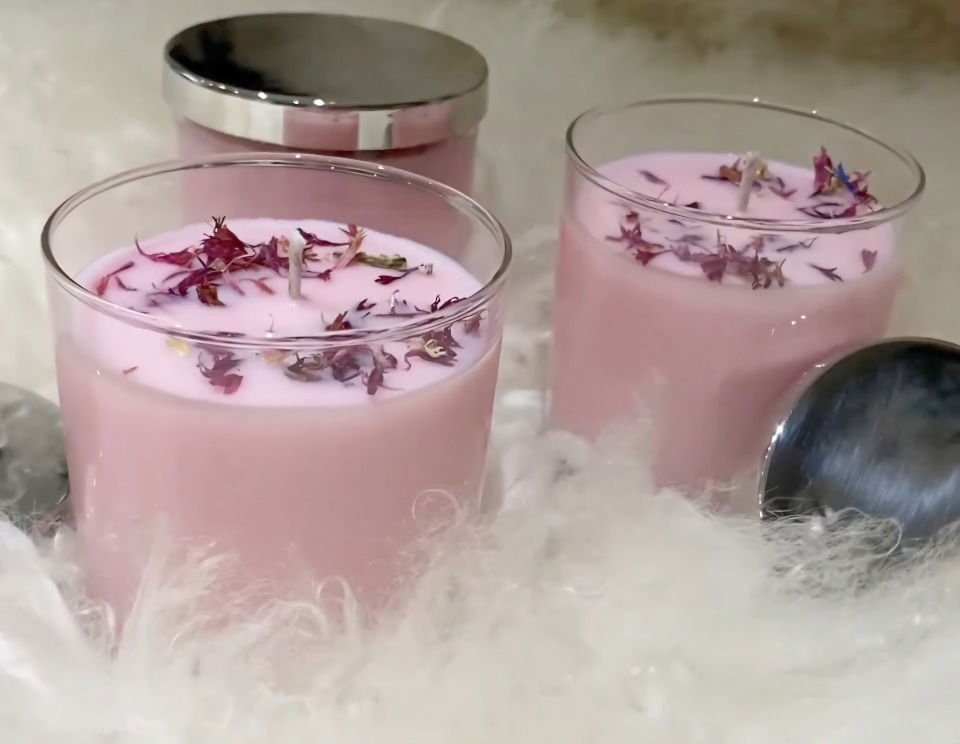
After the wax has completely melted, you can begin the customization process. To achieve a soft, pastel pink hue, I incorporated just a few dye shards, though you can modify the amount to suit your taste. Once the color has integrated, pour in your fragrance oil. Blend the mixture with a gentle hand to prevent air bubbles from forming, much like the careful folding technique used in baking.
The Pouring and Curing Phase
Slowly transfer the liquid wax into your prepared jars, filling them only partway to allow for any necessary top-offs later. Wait approximately thirty minutes, then inspect the surface for any sinkholes or air pockets. If you find any, simply melt a small amount of additional wax and fill the imperfections.
To add a unique flair, I chose to scatter dried flower petals across the surface of the cooling wax—this is an optional decorative touch that provides a beautiful, rustic charm.
Final Adjustments
Allow your candles to cure for a full 24 hours. Once set, remove the centering stabilizers and use a pair of scissors or a dedicated wick trimmer to cut the wick down to roughly 5 millimeters. This final step is crucial for maintaining a safe and controlled flame during use.
Sustainable Candle Crafting Practices
Modern candle making has transitioned from a simple hobby into a movement focused on sustainability and conscious living. If you value both handmade decor and environmental responsibility, eco-friendly candle making is an ideal pursuit. Let’s explore how to craft candles sustainably, step by step.
1. Selecting Sustainable Waxes
Soy Wax: Created from soybean oil, this is a top-tier choice for the environmentally conscious maker. Its benefits include:
- Renewable Origins: Because soybeans are a crop, this wax is a replenishable resource.
- Clean Combustion: Soy-based candles produce far less soot and fewer pollutants, keeping your indoor air cleaner.
- Natural Degradation: Soy wax is biodegradable, ensuring it won’t persist in the environment after the candle is spent.
2. Utilizing Organic Cotton Wicks
The choice of wick is more impactful than many realize. Standard wicks may contain heavy metals like lead. Transitioning to organic cotton is beneficial because:
- Toxin-Free: These wicks lack synthetic chemicals or harmful additives.
- Consistent Melting: They encourage a uniform melt pool, which prevents “tunneling” and extends the life of the candle.
- Eco-Friendly: Cotton is a natural fiber that breaks down easily in landfills.
3. Choosing Mindful Fragrances
While scent adds character to a room, the quality of the oil matters immensely:
- Pure Essential Oils: Consider using oils derived directly from plants. These are non-toxic and often provide aromatherapeutic advantages.
- Avoiding Synthetics: Many artificial scents contain phthalates. Always look for high-quality, clean-burning alternatives.
4. Repurposing Containers
The vessel you choose is part of the sustainability cycle. Rather than buying new, consider:
- Upcycled Glass: Give a second life to old jam or pickle jars. They are durable, easy to sanitize, and look great.
- Metal Tins: These are lightweight, sturdy, and can be easily recycled after use.
5. Reducing Packaging Waste
An eco-friendly candle should be presented in a way that respects the planet:
- Minimalist Labeling: Use simple designs printed on recycled or biodegradable paper.
- Waste-Free Wrapping: Avoid unnecessary plastic wrap; let the natural beauty of the candle be the focus.
Keep in mind that every small choice makes a difference. By focusing on sustainable methods, you aren’t just making decor; you are supporting a healthier planet.
Frequently Asked Questions for New Makers
Explore our detailed FAQ section to find answers to all your candle-making queries. We cover everything from foundational materials to advanced techniques!
Which Wax is Best for My Project?
Your choice of wax dictates how your candle will behave. Common varieties include:
Soy Wax: A sustainable, clean-burning favorite that carries scents beautifully.
Paraffin Wax: A cost-effective, traditional option that is very easy for beginners to handle.
Beeswax: A natural wax with a faint honey aroma, perfect for making pillars that don’t drip.
Palm Wax: An eco-friendly choice known for creating beautiful, frosted crystalline textures.
What Are the Best Ways to Add Natural Scent?
You can enhance your candles using natural aromatics. Try these techniques:
Essential Oils: Scents like eucalyptus, lemon, lavender, and vanilla are excellent choices.
Botanicals: Incorporate dried rosemary or whole cinnamon sticks directly into the liquid wax.
Fruit Peels: Use freshly grated citrus zest for a bright, clean fragrance.
Which Wick Type Should I Choose?
Wicks influence the burn rate and heat. Your options include:
Cotton Wicks: The reliable, standard choice for most projects.
Wooden Wicks: These provide a unique, comforting crackling sound as they burn.
Hemp Wicks: A slow-burning, sustainable alternative to traditional cotton.
How Can I Create Unique Shapes?
Molds allow you to move beyond the jar:
Traditional Pillars: Use tall, cylindrical molds for a classic look.
Small Tealights: Use shallow molds for quick, easy-to-make batches.
Custom Shapes: Silicone molds can produce candles in the shape of stars, hearts, or animals.
Why is the Cooling Process So Important?
Allowing the wax to cool slowly is essential for quality:
Preventing Surface Cracks: If wax cools too quickly, it can shrink and crack.
Achieving a Level Top: Slow cooling helps maintain a professional, smooth surface.
Post-Cooling Trimming: Wait until the candle is cold before trimming the wick to avoid soot buildup.
What Safety Measures Should I Follow?
Airflow: Always work in a room with good ventilation to prevent the buildup of fumes.
Heating Method: Stick to a double boiler or microwave-safe tools to melt wax safely.
Fire Prevention: Never leave a heat source unattended and keep safety equipment nearby.
Candle making is a perfect blend of scientific precision and artistic expression. Don’t be afraid to experiment and enjoy the creative process!
Closing Thoughts
Embarking on this candle-making journey was a deeply gratifying experience. It took the mystery out of the process for me and gave me the tools to create something both aesthetic and functional. If I could successfully produce candles that look professional and smell wonderful as a complete beginner, you certainly can too! Success lies in being patient and paying close attention to the details. Why not start today? You might just find yourself discovering a brand-new passion that lights up your life.


