


Share This Article
Table of Contents
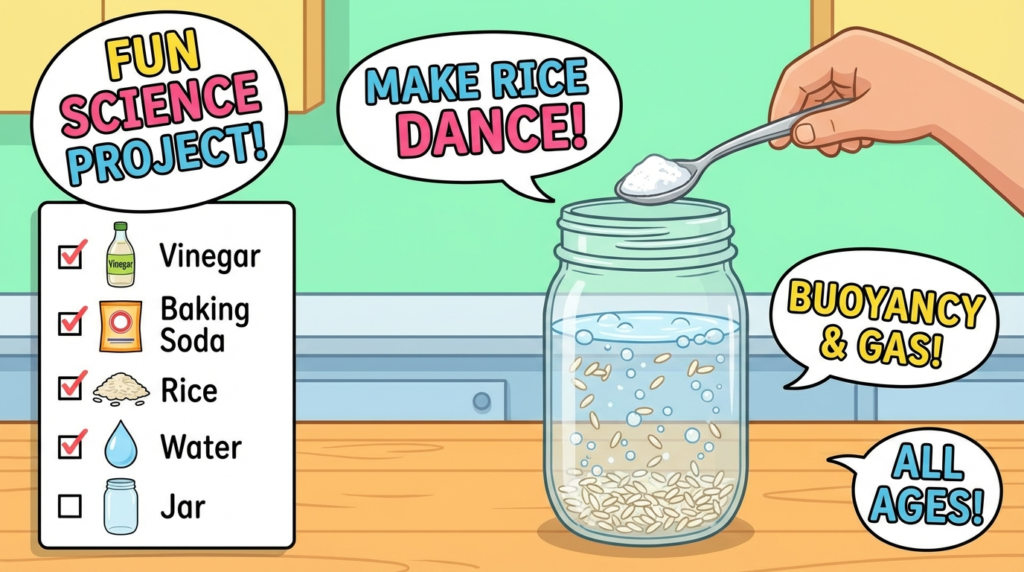
The Dancing Rice Experiment serves as a delightful and immersive science activity that brings core chemical concepts to life! This project elegantly demonstrates the mechanics of gas production and buoyancy in a way that is both visually stimulating and highly educational. By simulating the effect of rice grains “dancing” within a carbonated mixture, you and your children can engage in a tactile scientific lesson that feels truly magical. Beyond sparking wonder and curiosity, this activity promotes essential skills like hypothesis testing and critical thinking. It is an ideal fusion of play and learning, perfectly suited for both the classroom and the home. Let’s prepare to watch the rice spring into action!

Why You’ll Love This Dancing Rice Experiment:
- Engaging for All Ages: A hit with both children and adults!
- Simple and Safe: Utilizes common, non-toxic household items.
- Educational: Explores the scientific principles of gas production and density.
- Visually Stunning: The rhythmic “dancing” motion is mesmerizing to watch.
- Quick Setup: Fast preparation with very little cleanup required.

Materials:
- Uncooked rice
- Baking soda
- Vinegar
- Clear glass or plastic container
- Water
- Food coloring (optional)
Full Step-by-Step:
Step 1: Prepare Your Rice
- Measure out roughly 1/4 cup of dry, uncooked rice.
- Set aside the grains in a small bowl to use when you are ready.
Step 2: Create the Fizzy Solution
- In a separate container, combine 1 cup of water with 2 tablespoons of baking soda.
- Stir well until the powder has fully dissolved; you may see minor bubbling occur.
Step 3: Add Food Coloring
- If desired, incorporate a few drops of food coloring into your mixture and stir to reach your preferred hue. This adds a vibrant visual layer to the demonstration.
Step 4: Combine
- Pour the prepared baking soda solution into a clear glass or plastic container.
- Carefully scatter the uncooked rice over the surface of the liquid.
Step 5: Watch the Dance
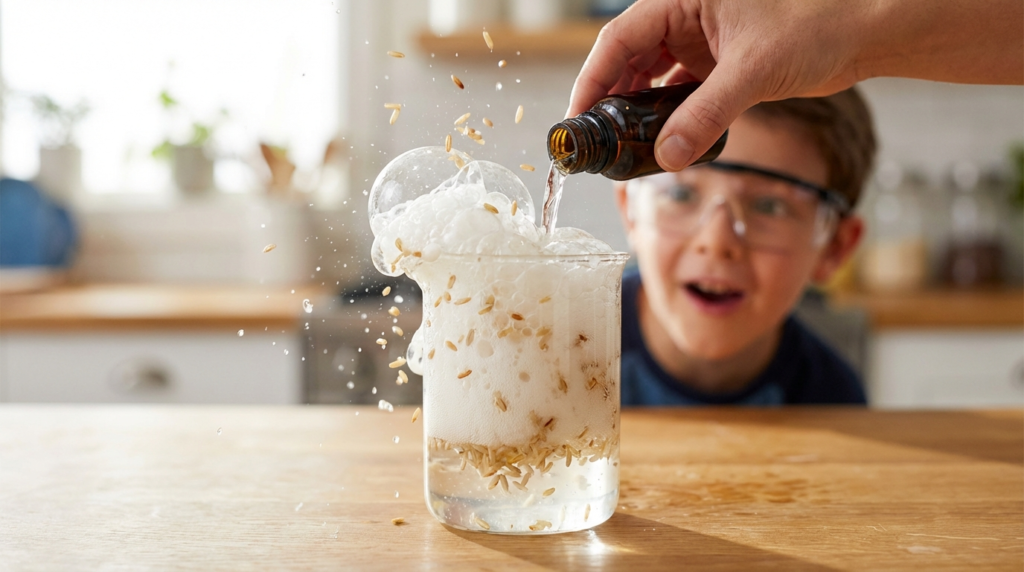
- Observe the reaction closely! As gas bubbles form, they will adhere to the rice, lifting it to the surface and creating a rhythmic “dancing” effect within the vessel.
Tips & Variations:
- Swap Ingredients: Try substituting the rice with alternative grains like small pasta or couscous to observe different reactions.
- Vary the Amount of Baking Soda: Experiment with different concentrations of baking soda in the water to see how it changes the intensity of the bubbling.
- Add a Theme: Turn this into a themed science session by explaining the underlying concepts of density and buoyancy as you perform the steps.
Frequently Asked Questions:
1. Can I use other types of rice?
Absolutely! Feel free to test white rice, quinoa, or brown rice to see how varying grain types react in the solution.
2. What should I do if there are no bubbles?
Ensure your baking soda is fresh and completely incorporated into the water. You can also add a splash of vinegar to trigger a more vigorous reaction.
3. Is this experiment safe for young children?
Yes, it is! Every ingredient is non-toxic and child-friendly. However, we always recommend adult supervision during the process.
4. How long does the dancing effect last?
The activity usually lasts for several minutes, though you can easily reignite the reaction by adding a bit more vinegar to the container.
Suggestions:
- Extend Learning: Once the experiment concludes, discuss the scientific concepts involved or have the kids write down their observations.
- Create a Chart: Keep a log of your different trials and results to foster a spirit of scientific inquiry.
- Make it a group project: Invite friends or siblings to join in for a collaborative afternoon of science!
Final Thoughts
The Dancing Rice Experiment is a fantastic, memorable way to introduce scientific principles. Encourage the little ones to adjust variables and discuss their findings! If you give this experiment a try, please share your thoughts or any creative twists you added in the comments below. Your input helps inspire others to join the fun!
Dancing Rice Experiment
A fun and engaging science project that showcases principles of buoyancy and gas production using rice and a fizzy solution.
Prep Time 10 minutesmins
Total Time 10 minutesmins
Servings: 1experiment
Course: Science Experiment
Ingredients
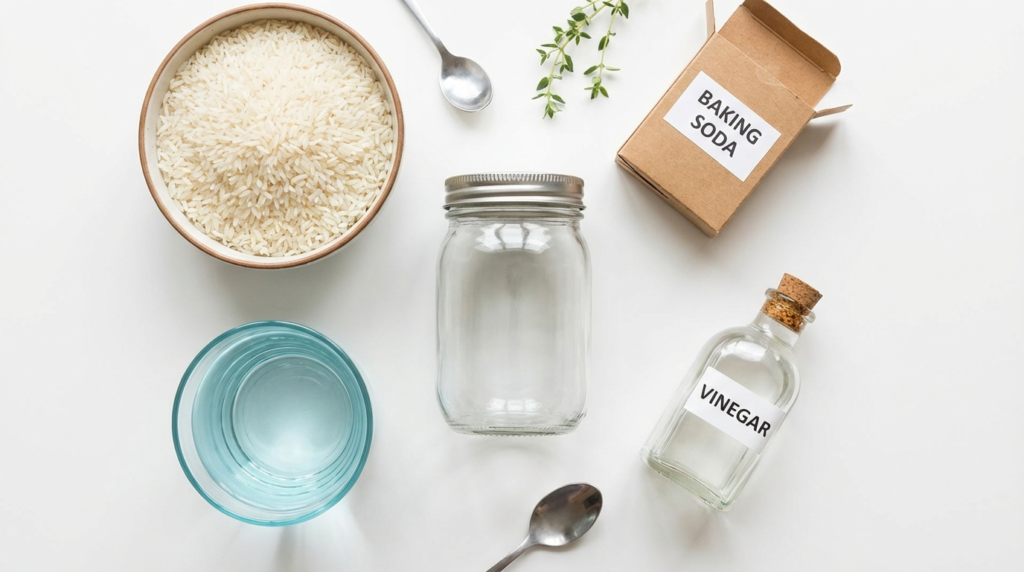
Materials Needed
- 1/4cupUncooked riceAny type of rice can be used.
- 1cupWater
- 2tablespoonsBaking sodaEnsure it is fresh for best results.
- to tastedropsFood coloring (optional)Add for visual effect.
- as neededVinegarUsed to refresh the reaction.
- 1containerClear glass or plastic containerFor conducting the experiment.
Method
Preparation
- Measure about 1/4 cup of uncooked rice and set aside in a bowl for later use.
- In a separate container, mix 1 cup of water with 2 tablespoons of baking soda. Stir well until the baking soda is completely dissolved.
- If desired, add a few drops of food coloring to the solution and mix to achieve your preferred color.
- Pour the fizzy baking soda solution into a clear glass or plastic container.
- Gently sprinkle the uncooked rice on top of the solution.
- Observe closely! As the bubbles rise, they will attach to the rice, causing it to ‘dance’ up and down in the container.

Notes
Experiment with different types of grains. Adjust the baking soda-to-water ratio for varied bubbling effects. This is safe for children but requires adult supervision.


