


O
Table of Contents
Creating a DIY spring wreath is an incredibly enjoyable and soothing activity. I began the project by collecting all necessary components, including a wreath form, faux blossoms, and a hot glue gun. The instructions are straightforward enough for any beginner to follow, and there is a great sense of accomplishment in seeing the finished piece. This walkthrough is designed to help you assemble a stunning floral arrangement while enjoying every moment of the craft.

My goal is for these steps to motivate you to design your own seasonal decor. With just a few simple moves, you can produce something truly elegant. Let’s dive into this delightful crafting adventure.
The Heritage and Meaning of Springtime Wreaths
Wreaths for the spring season are far more than mere ornaments; they possess a deep-seated history that crosses various eras and societies. The custom of displaying wreaths is an ancient practice filled with profound meaning and intent.
- Roots and Symbolic Meaning: The earliest recorded wreaths appeared in ancient Egyptian, Persian, and Greek cultures. They acted as emblems of authority, achievement, and respect. In ancient Greece, crowns woven from oak, olive, or laurel foliage were presented to poets and athletes to mark their glory and success.
- Cultural Importance: Throughout Europe, the tradition of springtime wreaths was linked to pagan rituals honoring the vernal equinox, representing a period of rebirth and transition. Following the rise of Christianity, the wreath took on spiritual symbolism. Its circular form, lacking a start or finish, represented eternity, while the use of evergreen plants signified perpetual life and growth.
- Contemporary Interpretations: In the modern era, spring wreaths have transformed into a staple of home styling and DIY crafting. They serve as a cheerful announcement of the season, frequently decorated with blossoms and ribbons that evoke the vitality and fresh start of springtime.
- The Legacy of Crafting: The technique of wreath construction has been inherited through the ages. It is a creative outlet that promotes individual artistry. Today’s designs often blend age-old methods with modern materials, showcasing the creator’s unique flair and current aesthetic movements.
By exploring the background of spring wreaths, we gain a better appreciation for their cultural value. They stand as a tribute to both historical traditions and seasonal happiness.

Essential Supplies for Your Project
- 14-inch Grapevine Wreath: This acts as the structural core of our project. Its organic appearance and robust build make it the perfect starting point.
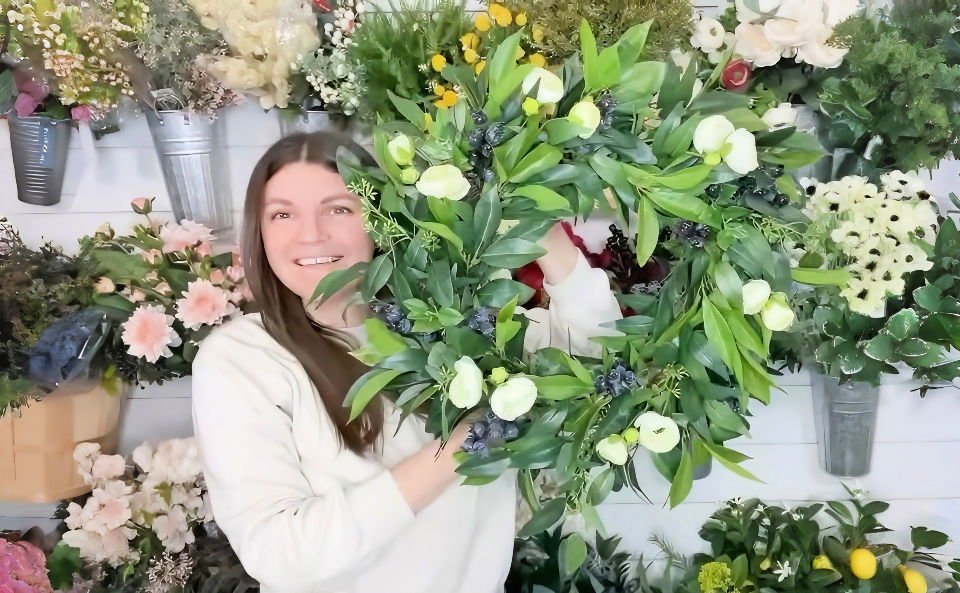
- Assorted Greenery: For this specific design, I chose Shikibu (Laurel), Seated Eucalyptus, and Osmanthus. These elements provide thickness and a vibrant, earthy foundation.
- White Ranunculus Blossoms: Featuring striking dark centers, these flowers serve as sophisticated focal points for the design.
- Blueberry Sprays: These are ideal for introducing a burst of contrasting color and interesting tactile detail.
- Hot Glue Gun and Adhesive Sticks: These tools are vital for firmly bonding all your decorative elements to the base.
- Wire Snips: Use these to cut your floral and greenery stems to the appropriate size.
Every item on this list plays a vital role in the overall look and durability of your finished wreath.
Detailed Assembly Instructions
Follow this comprehensive guide to assemble an exquisite DIY spring wreath. It is the ideal way to bring a touch of seasonal freshness to your living space!
Step 1: Preparing the Grapevine Base
Begin with a tidy 14-inch grapevine wreath. Examine the form for any stray twigs and prune them away. This ensures you have a polished and professional foundation for your floral work.
Step 2: Building the Greenery Foundation
Start the decorating process by layering in your foliage. I usually begin with the most budget-friendly option, which was the Osmanthus for this project. Trim the stems into manageable sizes that can be easily woven into the vines. Use hot glue to anchor each piece, following the natural curve of the grapevine to maintain a fluid look. Progress around the circle, adding each type of greenery one layer at a time to achieve a full and balanced appearance.
Step 3: Positioning the Flowers
Once your green base looks lush, it is time to integrate the white ranunculus flowers. Distribute these evenly across the wreath to create a sense of visual harmony. I’ve found that placing these bright white petals instantly revitalizes the arrangement and adds a sophisticated touch.
Step 4: Enhancing Detail with Blueberries
I particularly love including blueberries in my designs. They provide a surprising texture and a vivid blue shade that pops against the surrounding leaves. Scatter these throughout the wreath, tucking them into spots where they look most natural. Keep in mind that these bold accents are most effective when used sparingly.
Step 5: Refining the Final Look
Back away from your workspace and evaluate the wreath from a few feet away. This perspective makes it easier to identify any sparse patches or lopsided areas. If needed, tuck in extra foliage or a few more berries until the composition feels right. The best part of this DIY is its adaptability—feel free to tweak it until it matches your vision.
Advice for Display and Upkeep
To display your handiwork, you can attach a twine loop to the rear of the frame or simply hang the grapevine directly onto a hook. To maintain the vibrant colors of your wreath for as long as possible, you may want to apply a UV-resistant coating, particularly if it will be hanging in a sunny location.
Year-Round Customization
The flexibility of this design is one of its best features. When summer arrives, you might add crimson blooms for a patriotic aesthetic. During the autumn months, you can replace the spring elements with dried pinecones and fallen leaves. The creative opportunities are limitless.
Creative Styles for Your Springtime Decor
When designing a spring wreath, the options are as diverse as the flowers in a garden. Below are several style variations to suit different tastes, ensuring every entryway can display a bit of seasonal charm.
- Traditional Floral: You can’t go wrong with a classic flower arrangement. Utilize seasonal favorites such as hyacinths, daffodils, and tulips. You can arrange them in a balanced, symmetrical circle or try an off-center layout for a contemporary feel.
- Country Rustic: To achieve a farmhouse look, use natural components like mossy accents, burlap bows, and dry twigs. Adding a small bird’s nest or wooden cutouts can give the piece a warm, rural aesthetic.
- Sleek Minimalism: Often, simplicity is the most effective choice. A minimalist design might consist of a basic green ring with just one prominent flower or a high-quality ribbon. This approach is ideal for a modern, refined home.
- Bright and Courageous: If you enjoy a splash of color, go all out. Construct a wreath overflowing with intense shades. Use vivid greenery, large peonies, and neon ribbons to create a cheerful, high-energy statement.
- Fragrant Herb Garden: Merge beauty with utility by using live herbs like lavender, thyme, and rosemary. This wreath won’t just look beautiful; it will also provide a wonderful aroma and fresh ingredients for your kitchen.
- Coastal Inspiration: For fans of the ocean, a seaside-themed wreath can bring the coast to your front door. Incorporate bits of driftwood, seashells, and a palette of sandy beiges and soft blues.
- Whimsical Fairytale: Create a sense of enchantment with a storybook-inspired design. Use light pastels, dainty blossoms, and playful additions like decorative butterflies or tiny garden sprites.
- Celestial Night: For a distinctive look, try a night-sky theme. Use deep, dark foliage paired with silver highlights and small moon or star ornaments for a cosmic vibe.
- Engaging Features: Make your decor interactive by pinning small packets of flower seeds or uplifting notes to the wreath. It’s a charming way to greet guests and share a bit of kindness.
- Harvest of Fruit: Decorate your frame with faux representations of seasonal produce like apples, berries, or citrus. This adds a sense of abundance and freshness to the overall design.
The secret to a great design is letting your personal taste and the spirit of the season shine through. Whether you prefer a quiet, subtle look or a bold masterpiece, allow your imagination to take the lead.
Coordinating Your Wreath with Seasonal Accents
Matching your spring wreath with other home accents can turn your entire property into a seasonal celebration. Here is how to build a unified and welcoming environment through thoughtful decor pairings:
- Entryway Ensemble: Pair your wreath with a door sign and a welcome mat that align with your color palette. If your wreath features yellow tones, find a mat with a warm greeting in a similar shade.
- Porch Harmony: Carry the spring theme onto your porch by using planters that feature the same flowers found in your wreath. For example, if your wreath uses roses, place rose bushes in pots near the entrance.
- Window Box Coordination: Align your window displays with the style of your wreath. A rustic grapevine wreath looks wonderful when paired with window boxes full of wild grasses or unrefined greenery.
- Interior Integration: Bring the theme inside by creating centerpieces that use the same elements as your wreath. A simple bowl of matching flowers or a small candle ring can connect your indoor and outdoor spaces.
- Balcony Decoration: If you live in an apartment, hang garlands along your balcony railing that use the same ribbons or florals as your wreath for a consistent exterior look.
- Garden Reflection: Mirror your wreath’s design in your landscaping by planting flower beds that feature the same species. This creates a beautiful visual link between your house and the yard.
- Holiday Table Settings: For spring gatherings, choose linens and dishes that coordinate with your wreath’s colors. Placemats and napkins can be selected to boost the festive atmosphere.
- Ambiance Lighting: Gentle, warm lights can highlight the different textures of your wreath. Consider using battery-powered fairy lights to give your decor a soft glow after the sun sets.
- Aromatic Additions: Use room sprays or candles with scents that match the floral elements in your wreath. This adds a pleasant sensory layer to your home’s environment.
- Color Balance: Refer to a color wheel to find shades that complement your wreath for items like outdoor rugs and throw pillows. This helps create an inviting, well-designed space.
Utilize these pairing ideas to create a cohesive and friendly spring atmosphere. Keep the process simple, embrace the beauty of nature, and enjoy spreading seasonal cheer throughout your home.
Solving Frequent Crafting Challenges
Assembling a spring wreath should be a stress-free project, but you might run into a few hurdles. Here is a guide to fixing common problems so your crafting experience remains pleasant and successful.
What to do if plants and foliage wilt
- The Fix: Always prioritize fresh stems and ensure they are well-watered before you start. If you want a permanent solution, choose high-quality artificial silk flowers or sturdy dried varieties.
How to fix a thin or lopsided wreath
- The Fix: Incorporate additional greenery to mask any empty spots. Use different lengths and textures to create more volume. Don’t worry about perfect symmetry—sometimes a bit of irregularity adds a handcrafted charm!
What to do if ornaments won’t stay attached
- The Fix: Use plenty of hot glue or wrap floral wire tightly around the decorations. If they still fall off, the items might be too heavy for your base; try using lighter materials or adding extra support to the frame.
How to hide the wreath frame
- The Fix: Cover the base with moss or decorative ribbon before you begin adding flowers. This conceals the structure and provides a better surface for glue to adhere to.
What to do if the wreath hangs at an angle
- The Fix: Move heavier decorative pieces around to distribute the weight more evenly. Ensure you are using a solid hook and that the back of the wreath sits flush against the hanging surface.
How to prevent colors from fading
- The Fix: If your wreath is in a high-sun area, apply a UV-protection spray to the natural parts and select materials specifically labeled as fade-resistant.
How to protect your work from the elements
- The Fix: Use a clear weatherproofing spray to guard against wind and humidity. If possible, display your wreath in a covered area like a porch or behind a storm door.
Dealing with plant-based allergies
- The Fix: Be mindful of any sensitivities you or your family members might have. Swap out problematic real plants for hypoallergenic dried versions or high-quality faux alternatives.
By preparing for these potential issues, you can ensure your seasonal wreath stays beautiful and sturdy all season long.
Common Questions Regarding DIY Spring Wreaths
Explore our detailed FAQ section to learn everything there is to know about.
How can I make a spring wreath if I’m a beginner?
Even if you’re new to crafting, making a spring wreath is quite straightforward. Start with a simple wreath form, choose some embellishments like faux flowers or ribbons, and use hot glue or floral wire to secure them. There’s no need for complex techniques, just let your creativity flow.
What types of flowers are best for a spring wreath?
Spring wreaths look great with a variety of flowers. You can use silk, dried, fabric, or paper flowers. Popular choices include peonies, succulents, roses, and pampas grass. If you’re feeling adventurous, you can even incorporate fresh flowers for a vibrant touch.
Can I create a spring wreath that lasts beyond the season?
Absolutely! Many DIY spring wreaths can be made with materials that are durable and can be stored for use year after year. Faux greenery and flowers are excellent choices for making a wreath that maintains its beauty over time.
Are there any easy-to-follow tutorials for making a DIY spring wreath?
Yes, there are numerous tutorials available that can guide you through the process. These often include step-by-step instructions and sometimes videos to help you make a beautiful wreath. Whether you prefer a rustic, chic, or colorful design, there’s a tutorial out there for you.
How do I choose the right color scheme for my spring wreath?
Selecting the right color scheme for your spring wreath can really enhance its appeal. Consider the colors that you associate with spring, such as pastel pinks, yellows, greens, and blues. You can also draw inspiration from spring flowers like tulips, daffodils, and hyacinths. If you prefer a more natural look, opt for earthy tones and add pops of color with bright flowers or ribbons.


